The Japan before Japan
Most people meet Japanese history too late. They arrive with samurai, castles, ninja, tea rooms, and the polished streets of Kyoto already in place, as if Japan had been waiting there fully formed.
It had not.
The more interesting story begins before the country knows exactly what it is. The archipelago was not a neat nation stretching naturally from Hokkaido to Okinawa. It was a chain of communities, ritual centers, ambitious families, regional powers, and frontier zones. Some looked across the sea to China and Korea. Some fought over land and water. Some built graves so large they still bend the map today.
How this site tells the story: when the sources leave room for more than one reading, we choose the most compelling route through the material, while keeping the chronology and historical ground visible.
Ancient Japan is not a quiet preface to the samurai age. It is the first great drama: how a scattered archipelago began to imagine itself as a country.
Rice, surplus, and conflict
The first great turn in this story is not a battle. It is a field.
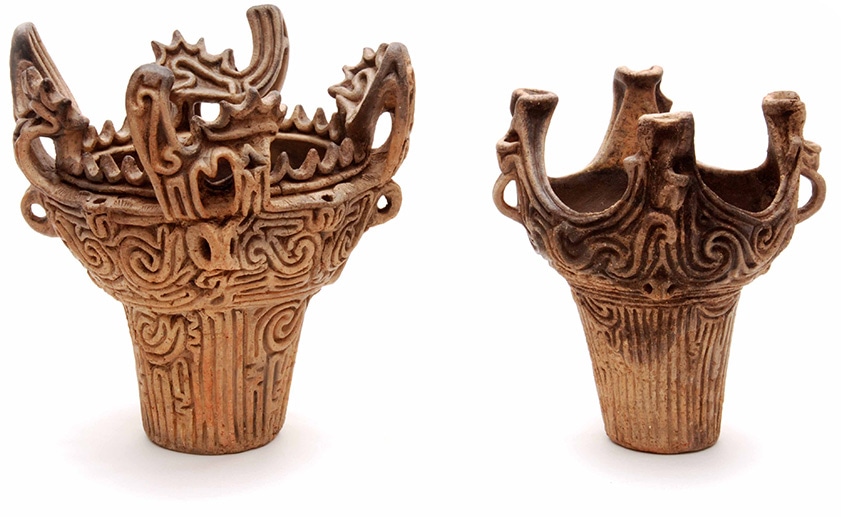
Jomon communities hunted, gathered, fished, made pottery, and built settlements with a culture far richer than the old image of "primitive" life suggests. But they were not yet living in a rice world: a world of managed water, stored harvests, defended surplus, and leaders who could turn food into authority.
Yayoi society changed the stakes. Wet-rice agriculture demanded timing, labor, land, and water control. Once rice could be stored, inequality had a physical shape. Some places had better fields. Some families held more grain. Someone had to organize irrigation. Someone had to guard the store. Someone else might decide to steal it.
Rice did not simply feed Japan. In the dramatic reading, rice invented Japanese politics: surplus, hierarchy, defense, and the first hard steps from village to state.
Himiko, queen of the fog
Then, out of the fog, a woman appears.
In the third century, China was divided among Wei, Wu, and Shu, the world later romanticized in the Romance of the Three Kingdoms. In records from that world, the Japanese archipelago enters written history through a ruler named Himiko. In 239, she is said to have sent envoys to Wei and received the title "Queen of Wa friendly to Wei."
That single detail changes the atmosphere of the whole period. Japan first appears not through its own official history, but through a foreign court's report. And the first unforgettable political figure is not a warrior king but a queen whose authority seems to have been ritual, shamanic, and political at once.
The mystery that refuses to die is Yamatai, the polity Himiko ruled. Was it in Kyushu, closer to the continent? Or in the Kinai region, near the later heart of Yamato power? On paper this sounds like a location dispute. In reality, it is a fight over the opening scene of Japanese state formation.
The more dramatic version places Himiko close to the later Yamato world, making her not a side character but a possible shadow at the beginning of the imperial story. It is not proven. That is exactly why it keeps pulling readers back.
Tombs as political theater
After Himiko, the written trail thins. But the land starts speaking.
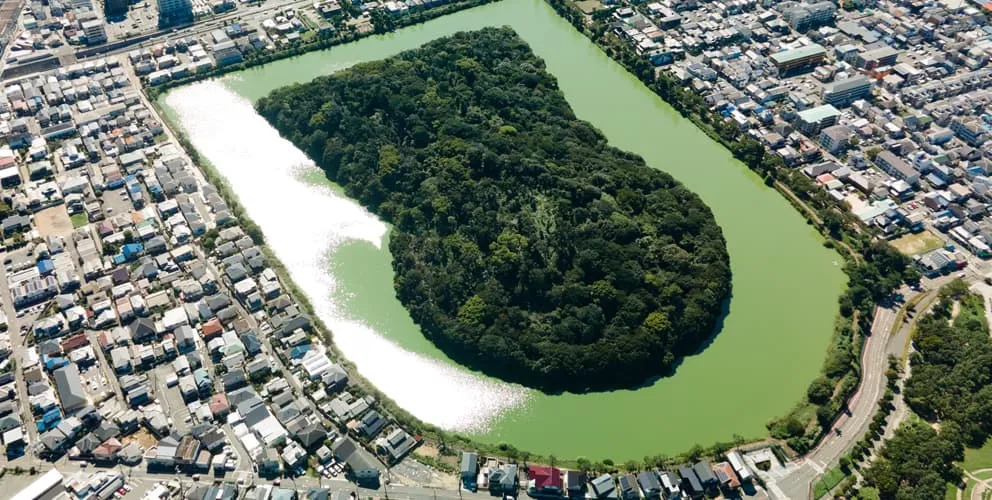
The Kofun period is named for the huge burial mounds that spread across the landscape. The most famous form is the keyhole-shaped tomb, or zenpo-koen-fun. To build one required workers, tools, planning, food, and obedience. A tomb of that scale is not only a grave. It is a billboard for power.
This is where ancient Japan becomes visual. Before chronicles tell the story clearly, tombs reveal that certain elites could command enormous labor and imitate a shared political style. The spread of similar tomb forms suggests that regional leaders were being drawn into a larger order.
Call it Yamato, but do not imagine a modern state too soon. It was more likely a coalition of powerful houses, held together by ritual, marriage, rank, tribute, coercion, and prestige. In other words: not a country yet, but a machine for turning local power into something larger.
Japan's beginning was not a straight line. It was a negotiation backed by graves big enough to intimidate the living.
Buddhism as state technology
Buddhism did not arrive in Japan only as a religion. It arrived as a civilizational upgrade.
In the mid-sixth century, Buddhism was transmitted from Baekje, one of the Korean kingdoms. Traditional accounts give 538 or 552 as the date of its official introduction. For modern readers, that may sound like a matter of temples and belief. For ancient rulers, it was much more: images, scriptures, architecture, literacy, calendars, scholarship, diplomacy, and the prestige of continental civilization.
Accepting Buddhism meant asking what kind of country Japan wanted to become. Would power remain centered on older clan rites and local deities? Or would the court adopt the tools of the great states across the sea?
That is why the conflict between the Soga and Mononobe clans matters. The Soga supported Buddhism. The Mononobe are remembered as defenders of older ritual practices tied to native deities and clan authority. In 587, Soga no Umako defeated Mononobe no Moriya. The Buddhist side won, and with it came a new political imagination.
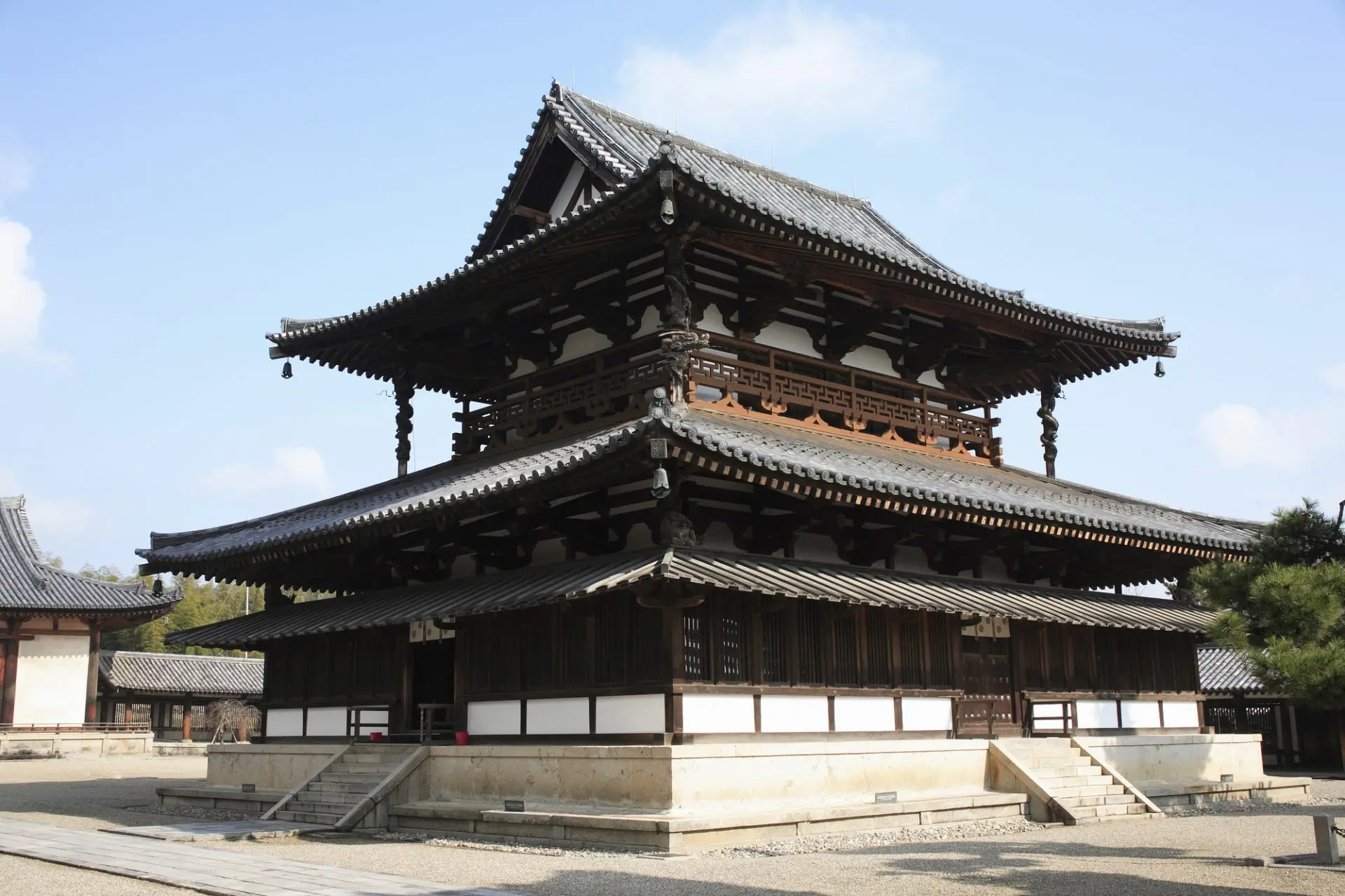
The age of Empress Suiko, Prince Umayado, later remembered as Prince Shotoku, and Soga no Umako became a moment when Japan faced the continent directly. Envoys were sent to Sui China. Institutions, rank, writing, and Buddhist culture became tools for imagining a more organized state.
This does not mean every later legend about Shotoku should be read literally. But legends also matter. They show how later Japan wanted to remember the moment when the archipelago turned toward the continent and started speaking the language of statecraft.
The coup that tried to remake time
Then came blood inside the palace.
In 645, Prince Naka no Oe and Nakatomi no Kamatari overthrew Soga no Iruka. The event is known as the Isshi Incident, and it opened the way to what is traditionally called the Taika Reform. It was not just palace drama. It was an attempt to break the grip of dominant clan elites and pull authority toward an emperor-centered state.
The era name "Taika" matters. To create an era name is to claim authority over time itself. In East Asia, calendars and era names were political. They showed who defined the order of the world. By setting its own era name, the Japanese court was making a statement: this polity would define its own time.
The reform ideal was known as public land and public people. Land and population were to be grasped by the state, rather than left entirely under private clan control. Later ritsuryo law, inspired by Chinese models, aimed to organize offices, ranks, provinces, registers, taxes, and military obligations.
But state formation did not move in a straight line. In 672, the Jinshin War broke out over succession after Emperor Tenji. The victor, Emperor Tenmu, strengthened the court and is often associated with the shaping of the names “Japan” and “emperor.” The compilation of the Kojiki and Nihon Shoki also belongs to this broader project of state memory.
A new state needs laws. It also needs a story about where it came from. That is why bureaucracy and myth grow together in this period. One organizes the living. The other recruits the past.
Capitals, monks, and danger
In 710, the capital moved to Heijo-kyo, today associated with Nara. Here the ritsuryo state became visible: offices, provinces, registers, taxes, and great Buddhist institutions. The court was no longer only an alliance of powerful houses. It was trying to look like a state.
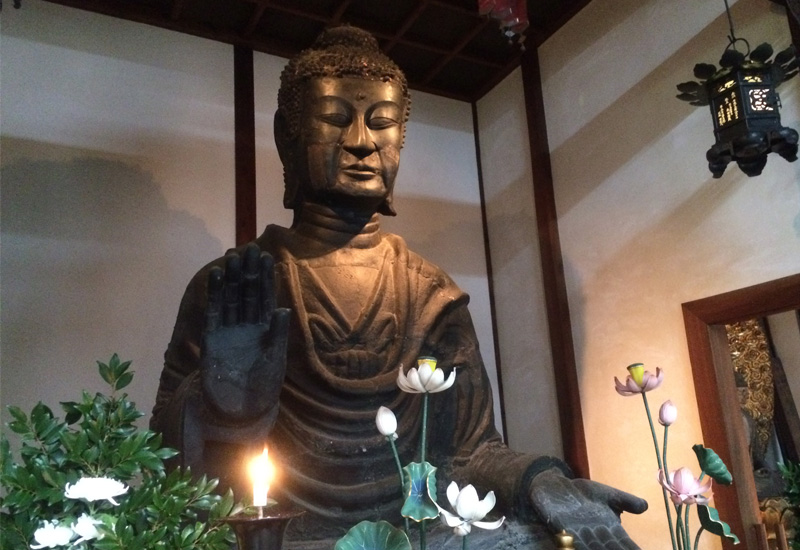
Emperor Shomu tried to protect the realm through Buddhism. In 752, the Great Buddha of Todai-ji was consecrated. The statue was not only a religious object. It was also a political symbol: a massive attempt to answer crisis through Buddhist power.
Yet Buddhism's closeness to government created a dangerous question. If Buddhist institutions could protect the state, could Buddhist figures also dominate the state? The monk Dokyo, favored by Empress Shotoku in the eighth century, became the clearest warning sign. His rise suggested that religious authority might move dangerously close to imperial authority.
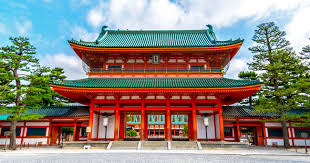
In 794, Emperor Kanmu moved the capital to Heian-kyo, the city later known as Kyoto. This was not just a change of address. It was an escape from the political gravity of Nara Buddhism and a bet that a new capital could reset the rules.
The Heian period also reminds us that “Japan” was still being made at its edges. In the northeast, there were peoples not fully under court control. The campaigns involving Sakanoue no Tamuramaro and the Emishi leader Aterui show that the ancient court's authority was expanding, contested, and incomplete.
How samurai became possible
Heian Japan is famous for courtly elegance: poetry, rank, ceremony, Fujiwara no Michinaga, Murasaki Shikibu, and The Tale of Genji. That image is real, but it is not the whole story.
Under the surface, the land system was changing. This is the part of Heian history that deserves to feel less like court literature and more like a slow political thriller. The ideal of public land weakened. Private estates, known as shoen, expanded. Aristocrats and temples held land in the provinces, and land needed protection. Armed men who guarded estates gradually gained importance. These men were part of the world from which samurai power emerged.
In 939, Taira no Masakado rebelled in the Kanto region and called himself a “new emperor.” The rebellion failed, but it revealed something important: far from Kyoto, armed regional power could imagine a political order of its own.
Fujiwara power reached a peak in the eleventh century, but it too changed. From 1086, retired emperors such as Shirakawa ruled through insei, or cloistered government. Around them stood armed guards such as the Hokumen no Bushi, the northern-face warriors.
By the twelfth century, warrior families were no longer background figures. The Hogen and Heiji disturbances opened the way for Taira no Kiyomori, who became Grand Minister of State in 1167. Politics was no longer only the world of court nobles.
The age of warriors did not appear from nowhere. It grew inside the elegant Heian world: land disputes, estate protection, regional military power, court politics, and the weakening of older systems. The sword became important because the paperwork stopped being enough.
Japan was made by crisis
The story from Jomon to Heian is not a preface to the "real" history of samurai and castles. It is the foundation.
Hunting and gathering gave way to rice agriculture. Small communities became regional powers. Yamatai gave way to the mystery of Yamato. Burial mounds made power visible. Buddhism brought continental statecraft. Ritsuryo law tried to organize land and people. Nara built a Buddhist state. Heian Kyoto refined court culture while warriors grew beneath the surface.
Japan was not born as a finished country. It was made through crisis: absorbing outside ideas, resisting them, moving capitals, writing myths, building laws, fighting over land, and expanding the reach of the court.
The samurai age is fascinating because it looks dramatic. But the deeper drama comes earlier, before the sword becomes the main symbol. It begins with rice, queens, tombs, monks, laws, capitals, and the long, difficult invention of Japan itself.